
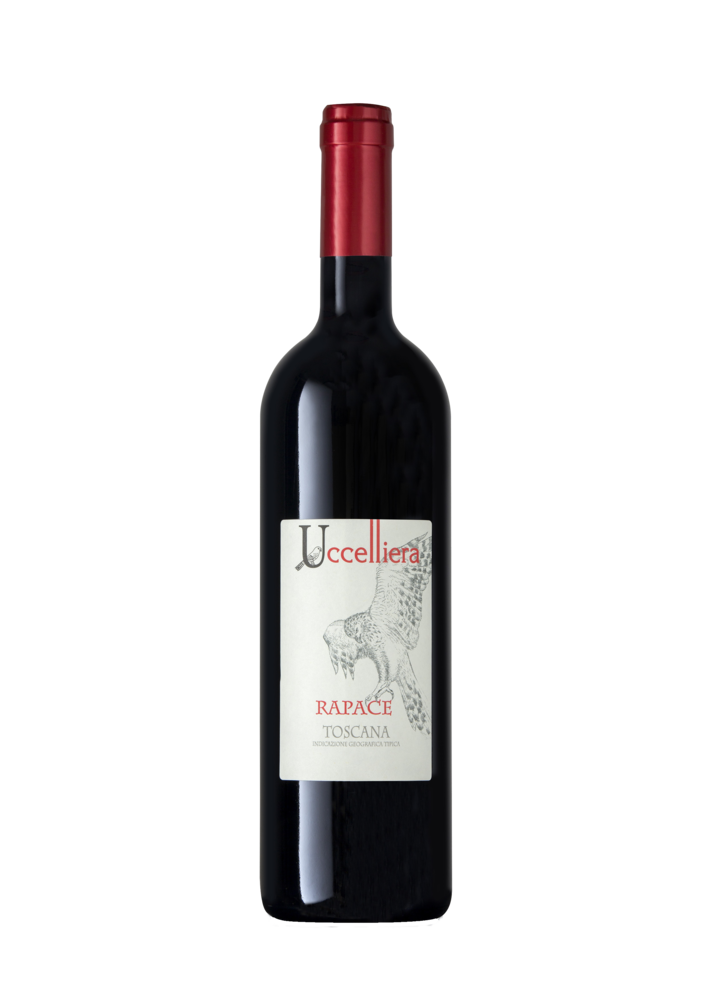
TOSCANA IGT – Indicazione Geografica Tipica Toscana
VINTAGE 2020 – bottles produced: 10330 of 750 ml – 500 of 1500 ml
70% Sangiovese, 20% Merlot, 10% Cabernet Sauvignon
wine obtained by a selection of sangiovese grapes, reclassified from Brunello di Montalcino designated vineyards, and estate grown merlot and cabernet sauvignon; covering an area of about 7 hectares planted between 1975 and 2000 in Castelnuovo dell’Abate, in the south-east area of Montalcino, at an altitude from 150 (492 ft) to 350 (1150 ft) a.s.l. The soil is calcareous clay, sandy of a medium texture, rich of minerals and layers of skeleton.
the principle of sustainability leads to the best development of each single vine through practices respectful of the soil, of the grape variety and of the vintage.
The vines are trained to spurred cordon and guyot with a density from 3000 to 5700 plants per hectare.
a mild winter with moderate rainfalls followed by a rather cold early spring with some snowfall during the germination that didn’t damage the new buds. The late spring was rainy with temperatures above the average that allowed an optimal growth of the grape-berries. The summer, hot and dry with occasional showers, favoured a balanced phenolic ripening rich in aromatic characteristics.
manual from the 18th of September, conducted by our trained staff. The grapes selected during the harvest are the result of a careful management of the vegetative growth of the vines so that they express the characteristics of the appellation at their best.
the collected grapes reach the cellar in a short time and are addressed to the destemming process with the use of dry ice that prevent the berries from oxidation and, by cooling down the temperatures, preserve their original characteristics. Cool temperatures are kept for 7/8 days and allow the development of indigenous yeasts. The alcoholic fermentation of the three varietals blended together starts spontaneously at about 12°C (53°F) up to 25°C (77°F) and lasts 25/30 days with frequent pump-overs. After draining off the skins, malolactic conversion occurs in stainless steel. The wine evolves in French oak vessels for at least 12 months followed by a further refinement in bottle for a minimum of 6 months.
Alcohol 14.5% Vol.; total acidity 5.78 g/l; reduced sugar <1g/l; dry extract 32.3 g/l; pH 3.58